Functional Cardiology: ApoB, Lp(a), Coronary Calcium Score, and Cardiovascular Risk Beyond LDL

Dr. Tom Biernacki presenting his daily supplement protocol — The Private Practice

Quick answer: Conventional lipid panels miss 50% of heart attacks in people with “normal” LDL cholesterol — because cardiovascular risk is driven by small dense LDL particle number (LDL-P), oxidized LDL, lipoprotein(a), ApoB, and inflammatory burden, not simply total LDL cholesterol milligrams per deciliter. Functional cardiology’s advanced cardiovascular risk assessment — integrating LDL particle sizing, … Read more

Thyroid Optimization

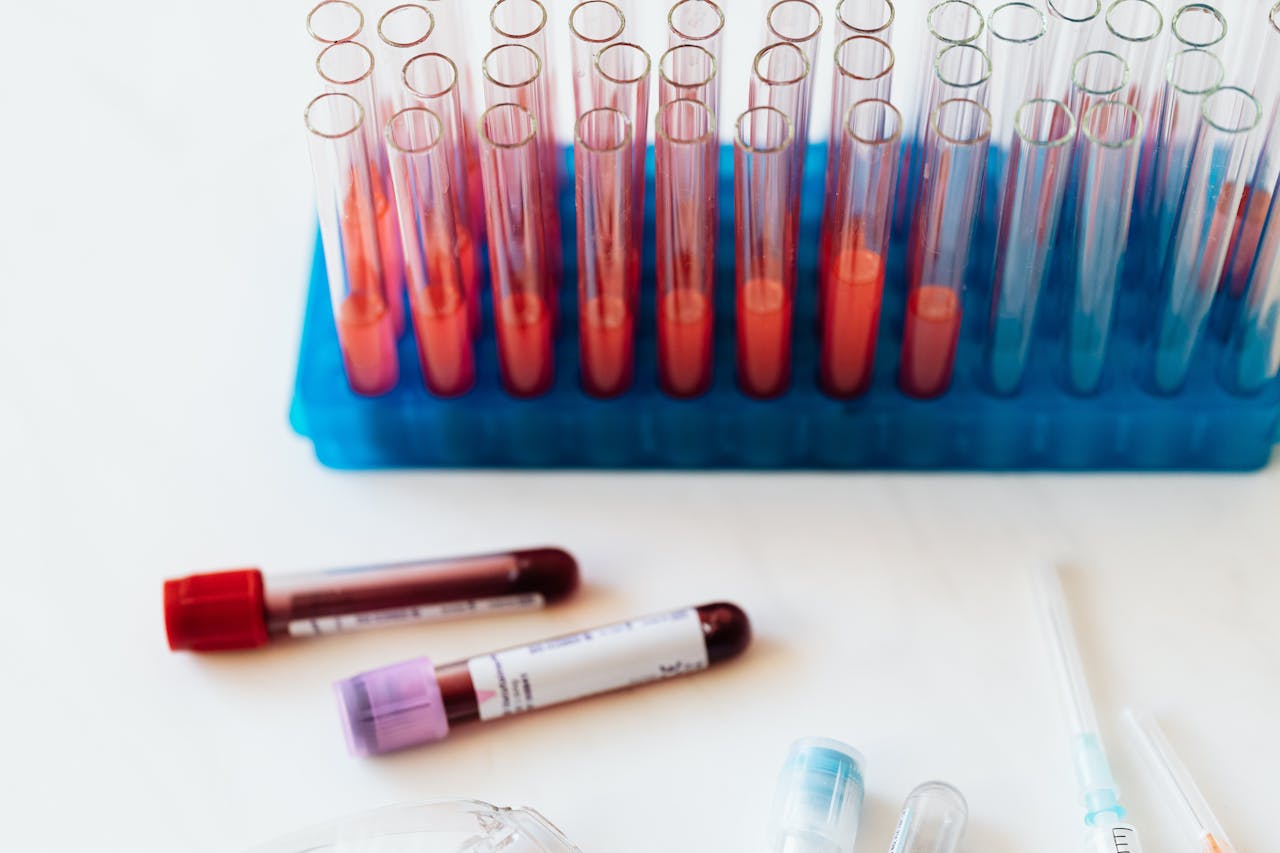
Blood test vials and laboratory equipment for health testing

Quick answer: Subclinical hypothyroidism — defined as TSH above 2.5 mIU/L with normal free T4 — affects 4–10% of adults yet is undertreated in conventional medicine due to reliance on population-derived “normal” TSH ranges that include symptomatic patients. Functional medicine’s comprehensive thyroid evaluation addresses autoimmunity (Hashimoto’s thyroiditis in 90% of hypothyroidism cases), T4-to-T3 conversion impairment, … Read more

Longevity Medicine

Health supplements and vitamin capsules for daily protocol

Quick answer: Longevity medicine — the clinical application of aging biology research — has moved from theoretical geroscience to evidence-based clinical practice. Interventions targeting the nine hallmarks of aging (Lopez-Otin 2013, Cell) now include FDA-approved drugs with demonstrated lifespan extension in model organisms, mTOR inhibitors with human clinical evidence, senolytics clearing dysfunctional “zombie cells,” and … Read more

IV Micronutrient Therapy: Myers Cocktail, High-Dose Vitamin C, NAD+, and Glutathione

Health supplements and vitamin capsules for daily protocol

Quick answer: Intravenous (IV) micronutrient therapy — including the Myers Cocktail, high-dose vitamin C, NAD+ infusions, and glutathione push — bypasses gastrointestinal absorption limitations to deliver therapeutic plasma concentrations of nutrients that oral supplementation cannot achieve. At 50g IV, vitamin C reaches plasma concentrations 70× higher than the oral ceiling; NAD+ IV raises intracellular NAD+ … Read more

Mast Cell Activation Syndrome (MCAS): Upstream Triggers, Quercetin, and Dysautonomia

Dr. Tom Biernacki presenting his daily supplement protocol — The Private Practice

Quick answer: Mast cell activation syndrome (MCAS) affects an estimated 17% of the population — most undiagnosed — causing multisystem symptoms including urticaria, flushing, anaphylaxis, GI dysfunction, neurological symptoms, and dysautonomia through pathological mast cell mediator release. Functional medicine’s approach identifies the upstream triggers driving mast cell hyperreactivity — including gut dysbiosis, environmental toxins, infections, … Read more

Ozone Therapy: Major Autohemotherapy, Prolozone, and the Nrf2 Antioxidant Pathway

Blood test vials and laboratory equipment for health testing

Quick answer: Ozone therapy (O₃) — administered as major autohemotherapy (MAH), rectal insufflation, or prolozone injections — activates the Nrf2/antioxidant pathway, upregulates superoxide dismutase and glutathione peroxidase, and modulates the immune response through lipid oxidation product (LOP) signaling. Over 3,000 peer-reviewed publications document ozone’s applications in infectious disease, musculoskeletal pain, cardiovascular disease, and metabolic optimization … Read more

Functional Medicine for Chronic Pain and Fibromyalgia

Blood test vials and laboratory equipment for health testing

Quick answer: Chronic pain affects over 50 million Americans — more than diabetes, heart disease, and cancer combined — yet conventional pain management’s reliance on opioids has produced an epidemic claiming 80,000+ annual deaths without addressing the underlying biology. Functional medicine’s neuroplasticity-based approach to chronic pain identifies and targets the central sensitization, neuroinflammation, mitochondrial dysfunction, … Read more

PCOS and Endometriosis: Functional Medicine’s Root-Cause Approach to Women’s Hormonal Health

Blood test vials and laboratory equipment for health testing

Quick answer: PCOS affects 8–13% of reproductive-age women worldwide — making it the most common endocrine disorder in women — yet up to 70% remain undiagnosed. Functional medicine addresses PCOS through its four root-cause phenotypes: insulin-driven, adrenal, inflammatory, and post-pill, with evidence-based interventions achieving menstrual cycle restoration in 50–80% of patients within 6 months. Polycystic … Read more

Peptide Therapy: BPC-157, Sermorelin, CJC-1295/Ipamorelin, and GLP-1 Agonists

Dr. Tom Biernacki presenting his daily supplement protocol — The Private Practice

Quick answer: Therapeutic peptides—short chains of amino acids that act as biological signaling molecules—represent one of the most rapidly growing areas of functional and regenerative medicine. BPC-157 (Body Protection Compound) demonstrates remarkable tissue repair and anti-inflammatory effects across 30+ animal studies; sermorelin and CJC-1295/Ipamorelin stimulate growth hormone release with safety profiles superior to synthetic HGH; … Read more

Perimenopause & Women’s Hormones

Dr. Tom Biernacki presenting his daily supplement protocol — The Private Practice

Quick answer: Perimenopause — beginning on average 4-7 years before menopause and affecting women as early as their late 30s — involves erratic estradiol fluctuations (often transiently elevated before declining), progesterone insufficiency beginning in the mid-to-late 30s due to anovulatory cycles, and measurable cognitive, metabolic, sleep, and mood consequences that precede the hot flash-dominated menopause … Read more