
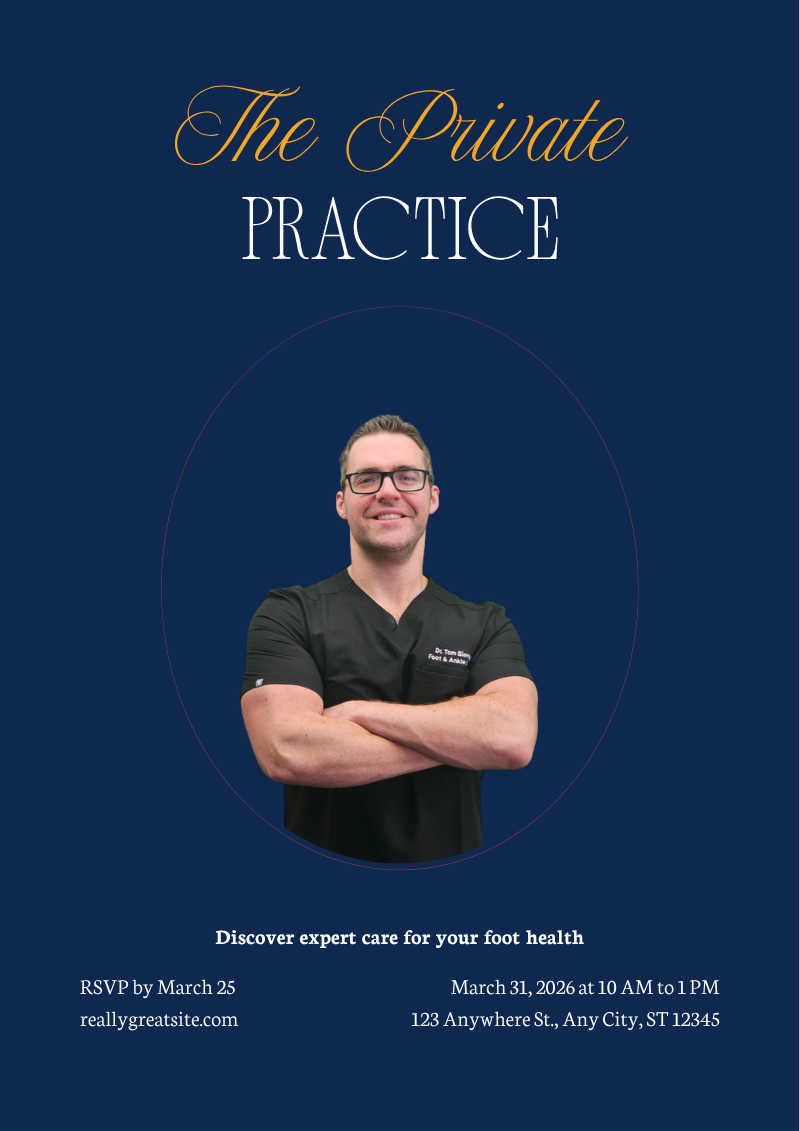
✅ Medically reviewed by Dr. Tom Biernacki, DPM, FACFAS
Board-certified podiatric surgeon · 3,000+ procedures · The Private Practice
Last reviewed: May 17, 2026
Quick answer: Surgery is far less dramatic than most patients fear. From prep to recovery, a board-certified podiatric surgeon who has performed 3,000+ procedures walks you through exactly what happens inside the operating room—including the details anesthesiologists and surgeons routinely skip.
What happens during surgery? It’s the question I hear most from patients. I’ve had thousands of conversations with people about to go under the knife, and I can see the fear in their eyes. They’re not afraid of pain—they’re afraid of the unknown.
Quick answer: Surgery has four distinct phases: anesthesia induction (10–30 seconds to full unconsciousness), sterile draping and positioning, the operative procedure itself, and a controlled wake-up. The most common patient fear — waking up during surgery — occurs in roughly 1 in 1,000 cases and is almost always brief and non-painful. The #1 thing that actually determines your surgical outcome isn’t the procedure itself — it’s the 6 weeks of recovery habits that follow it.
Table of Contents

As someone who’s been on the other side of that operating table for over 3,000 surgeries, I want to show you exactly what happens during surgery—step by step. Because knowing what’s coming takes away the scary part. The fear lives in mystery. The reality is actually pretty boring. And the same evidence-based mindset that demystifies the OR is what I apply to preventive care — like the 5 lab tests every adult over 35 should demand before any elective procedure.
What Anesthesia Actually Feels Like: The 5-Second Countdown
You’ve been prepped. You’re in the pre-op area. An anesthesiologist (a fully trained physician with years of experience) is introducing themselves. Then they say the words that make people nervous: “I’m going to put you to sleep now.”
Here’s what actually happens. First, you get an IV line—a small needle in your arm or hand. Then the anesthesiologist asks you to count backwards from 10. You start: “10… 9… 8… 7…” And somewhere between 7 and 6, you’re unconscious. That’s it. No panic. Just darkness—like the world’s fastest fade to black.
What you absolutely need to know: You won’t remember any of this. You won’t be aware of any passage of time. From your perspective, you’ll close your eyes, and then the next thing you know, you’re waking up in recovery and the surgery is over.
The myth that anesthesia wears off during surgery and you’re somehow trapped, aware but paralyzed? Let me be 100% clear: this doesn’t happen with modern anesthesia protocols. An anesthesiologist sits right next to you during the entire surgery, monitoring your vital signs continuously—heart rate, blood oxygen, blood pressure, and brain wave activity. If your body shows even a hint of waking up, medications are adjusted immediately.
What Surgeons Do While You’re Under (It’s Precisely Choreographed)
You’re asleep. Your anesthesia is stable. So what happens during surgery once you’re under? The operating room is controlled chaos—and I say “controlled” because everything is orchestrated precisely.
The surgical site is scrubbed with antiseptic solution. Sterile drapes are placed over you with a window exposing only the surgical site. The surgical techs set up the instrument tray. Everyone knows their role. During the surgery itself, the surgeon is focused entirely on the surgical site, the assistant helps retract tissue and hand instruments, the tech manages the sterile field, the anesthesiologist monitors your vitals, and the nurse documents everything.
Surgeons have done their specific procedure hundreds or thousands of times. We know the steps. We know where the anatomy is. We know what can go wrong and how to prevent it. When you watch a surgeon operate, it looks smooth and efficient because they’ve done it so many times it’s second nature.
Why “Faster Surgery” Is Actually a Red Flag
People often ask: “How long will my surgery take?” And they follow up with: “The quicker the better, right?” No. Not at all. If a surgeon is rushing a procedure, that’s a sign something is wrong.
Knowing what happens during surgery means understanding pace. Good reasons surgeons move efficiently include having done the procedure hundreds of times, not wasting motion, being confident in their technique, and having steady, purposeful hands. Bad reasons include being overbooked and behind schedule, trying to make the surgery profitable, being distracted or fatigued, or skipping steps in the process.
A good surgeon should take whatever time is necessary to do the job right. The surgeon who worries me is the one who is always done “exactly on schedule” because that suggests they’re not adapting to what they find in the operating room.
5 Common Surgery Myths That Create Unnecessary Fear
Myth #1: “Surgeons sometimes operate on the wrong body part.” This is called “wrong site surgery,” and it happens in about 1 per 100,000 surgeries (0.001%). Protocols including surgical site marking, verbal confirmation, and imaging verification make this extraordinarily rare.
Myth #2: “Anesthesia is toxic and can damage your brain.” Modern anesthetics are extremely safe. Serious complications are rare. Death from anesthesia alone is roughly 1 per 200,000-300,000 cases. Some patients experience temporary brain fog post-surgery, but this usually resolves within days to weeks.
Myth #3: “Surgeons accidentally nick major blood vessels or nerves.” Complications can happen, but “accidentally” nicking a major structure is rare because surgeons know the anatomy intimately, visualize carefully, use imaging to guide placement, and are specifically trained on avoiding critical structures.
Myth #4: “Surgeons are usually distracted during surgery.” Some surgeons talk during surgery—usually giving instructions or asking for instruments. But focus remains on the surgical site. Hands are precise. The talking doesn’t interfere with the surgery.
Myth #5: “You’ll wake up in the middle of surgery.” This doesn’t happen with modern anesthesia. Your vital signs are monitored continuously. The anesthesiologist is right there. This is one of the most well-controlled aspects of modern medicine.
Post-Op Recovery: What the First 24 Hours Really Look Like
Immediately after surgery (recovery room, 1-3 hours): Now you know what happens during surgery itself—but what about after? You’re groggy. Your mouth might feel dry. You might feel cold or nauseous as the anesthesia leaves your system. You’ll have pain at the surgical site managed with medication. A nurse checks on you frequently. You probably won’t remember much from this period.
Later that day or the next day: The fogginess clears. Pain is managed with medication. You receive specific post-operative instructions about keeping the incision clean, when to change dressings, medication schedules, and when to follow up with your surgeon (usually 1-2 weeks).
The first 24 hours are usually the hardest. By day 2-3, most people feel significantly better. The critical thing: follow the post-operative instructions exactly. The reason surgeries fail isn’t usually the surgeon making a mistake during the operation—it’s patients not following post-op protocols. People shower too early, lift things they shouldn’t, exercise too soon, stop taking antibiotics early, or skip follow-up appointments.
How Surgeons Handle Complications in Real-Time
Complications happen. Not often, but they happen. Maybe bleeding is heavier than expected, the anatomy is different than imaging showed, an organ is more fragile than anticipated, or there’s scar tissue from a previous surgery.
What happens? The surgeon adapts. We have protocols: call for help if needed, change the plan if necessary, address the complication in real-time, document what happened, and communicate with the patient about what occurred.
The ability to adapt when something unexpected happens is part of what you’re paying for when you hire an experienced surgeon. Is there risk? Yes. Medicine involves risk. But managed risk, with an experienced team, in a controlled environment, is very different from unmanaged risk.
Why Your Surgeon Seems So Calm (And Why You Should Be Too)
One thing patients notice is that surgeons are often calm—maybe even a little casual. This freaks people out. “Shouldn’t you be more nervous?” No. And here’s why. Understanding what happens during surgery from the surgeon’s perspective changes everything.
Think about a pilot. They’ve flown the same route 1,000 times. They know exactly what to expect. They know what could go wrong and how to handle it. They’re not panicking—they’re calm and focused. That’s not because flying isn’t serious. It’s because they’re prepared. That’s what your surgeon is. Prepared. Experienced. Confident.
For more information on what to expect before surgery, the Johns Hopkins Medicine surgery preparation guide offers excellent resources. The National Institutes of Health also provides trusted guidance on what happens during surgery.
To learn more about Dr. Tom’s surgical philosophy and patient-first approach, visit our About page or explore more evidence-based health articles on The Private Practice.
The Bottom Line: You’re in Good Hands
Surgery is scary. The fear is valid. But now you know what happens during surgery—from start to finish. The fear is usually based on the unknown, and you’ve just eliminated that.
Your surgeon has been doing this for years. The anesthesiologist has managed thousands of patients. The surgical team knows their roles. You’ll be asleep. You won’t remember any of it. And when you wake up, it’ll be over.
The scary part is the not knowing. Now that you understand what happens during surgery, it’s actually just science, skill, and a team of people whose entire job is keeping you safe.
The bottom line: What happens during surgery is far more controlled, precise, and safe than most people imagine. The operating room is a choreographed environment where every team member knows exactly what happens during surgery at each stage. If you’re facing a procedure, take comfort in knowing that thousands of professionals dedicate their careers to making sure what happens during surgery goes exactly as planned.
Ready to stop guessing and start knowing? Book a private consultation with Dr. Tom to review your results, build a personalized protocol, and get the kind of direct answers you won’t get in a 15-minute office visit. Or start immediately with the structured health courses — evidence-based programs built from 3,000+ surgeries and a decade of metabolic research.
Frequently Asked Questions
Are you conscious or awake during surgery?
For most procedures, you and your anesthesiologist choose between general anesthesia (fully unconscious) or regional/monitored anesthesia care with sedation (profoundly relaxed, comfortable, with no memory of the procedure). The choice depends on the surgery type, your health history, and personal preference. Very few patients are awake in the way they fear.
What does going under general anesthesia feel like?
Most patients describe counting backward and reaching 6 or 7 before an abrupt transition—there’s no gradual “falling asleep” sensation. Waking up in recovery often feels instantaneous even if hours passed. The brief disorientation on waking is completely normal and typically resolves within minutes.
What surgical risks don’t doctors usually mention?
Beyond the standard consent form, the outcomes that surprise patients most are: post-anesthesia cognitive fog (usually temporary, especially in patients over 65), emotional vulnerability during recovery as the adrenaline wears off, and the psychological difficulty of following restrictions when the surgical site looks healed. These aren’t dangers in the traditional sense—they’re the gaps between what you’re told and what you actually experience.
Sources
- Butterworth JF, Mackey DC, Wasnick JD. Morgan & Mikhail’s Clinical Anesthesiology. 6th ed. McGraw-Hill. 2018.
- Practice Guidelines for Preoperative Fasting. American Society of Anesthesiologists. 2017.
- Ghaferi AA, Birkmeyer JD, Dimick JB. Variation in hospital mortality associated with inpatient surgery. NEJM. 2009.
- Evered L, et al. Recommendations for the nomenclature of cognitive change associated with anaesthesia and surgery. Anesthesiology. 2018.
If you’re preparing for a procedure and want to optimize recovery, my evidence-based supplement protocol includes compounds proven to support tissue healing. For foot and ankle surgery specifically, you can book directly at Balance Foot & Ankle.
Dive Deeper
- Magnesium Deficiency: The Most Overlooked Reason You Feel Terrible
- What Your Vitamin D Level Actually Means (And Why 30 ng/mL Is Not Enough)
- Zone 2 Training: The Science-Backed Exercise for Longevity
- Insulin Resistance: Why 40% of Adults Have It and Don’t Know It
- Chronic Stress and Cortisol: What It’s Actually Doing to Your Body